
Circular economy is a model of production and consumption
The life cycle of products is extended
It implies, for example:
reducing waste to a minimum
recycling materials of products that reach the end of its life
And generates benefits, such as:
slows down the use of natural resources,
reduces landscape and habitat disruption and helps to limit biodiversity loss
contributes to reduce GHG emissions
reduces raw materials dependency and helps to mitigate the risks associated with supply chains
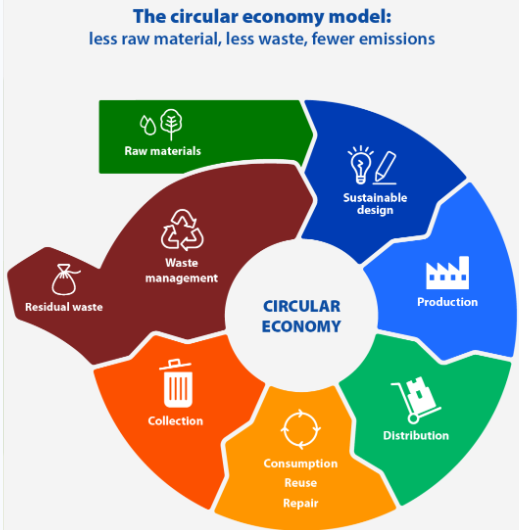
The EC’s Circular Economy Action Plan
- recognises circular economy as a prerequisite for climate neutrality.
The extraction and processing of materials account for around 50% of global GHG emissions – key aim of the circular economy is to retain the value of products and materials in use for as long as possible
- reduce the demand for virgin materials
- safe and sustainable design
- efficient production
- sustainable consumption
- longer and better use of products
- using waste as a resource
- energy-intensive parts of the circular economy powered by renewable energy


