
Understanding the environmental impact of human activities is crucial for developing sustainable practices and mitigating the negative consequences of our actions
Climate change
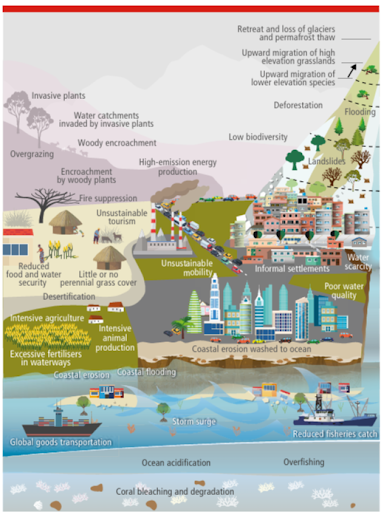
- Human activities that degrade ecosystems also drive global warming and negatively impact nature and people
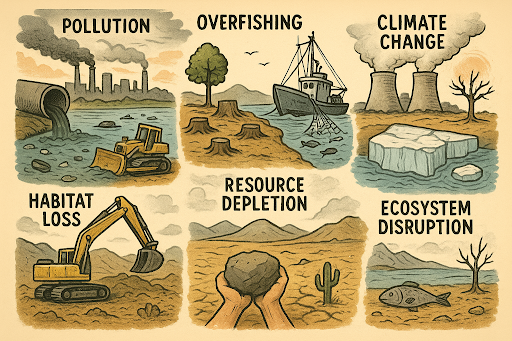
- Humans impact the physical environment in many ways, through pollution, burning fossil fuels, deforestation, overfishing, and more.
- Changes like these have triggered (Impacts):
- climate change,
- soil erosion,
- poor air quality,
- undrinkable water,
- ecosystem disruption,
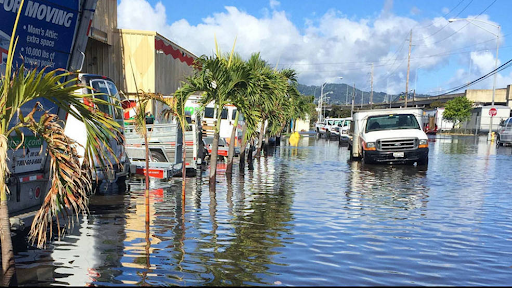
- melting glaciers and sea level rise, among other effects.
- From 1980 to 2023, extreme weather has been responsible for:
- Around 790 billion euros in economic losses.
- Around 246.000 human fatalities.
- Different regions in Europe will experience different changes in the patterns of extreme weather:
- In northern Europe, annual precipitation and heavy rainfall are likely to increase, with droughts becoming less frequent.
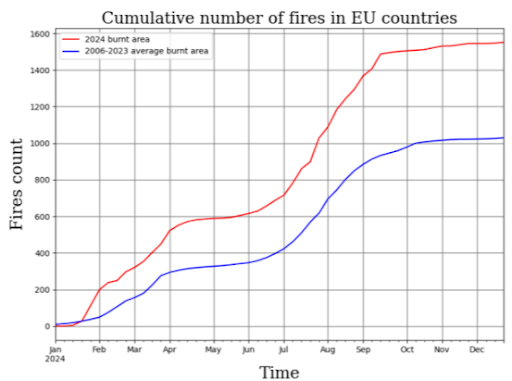
- Central Europe is likely to experience lower summer rainfall, but also harsher weather extremes (heavy precipitation, river floods, droughts and fire hazards), with mixed changes in annual precipitation and aridity.
- In southern Europe, annual precipitation and summer rainfall are projected to decrease, whereas aridity, droughts and fire hazards are all likely to increase.

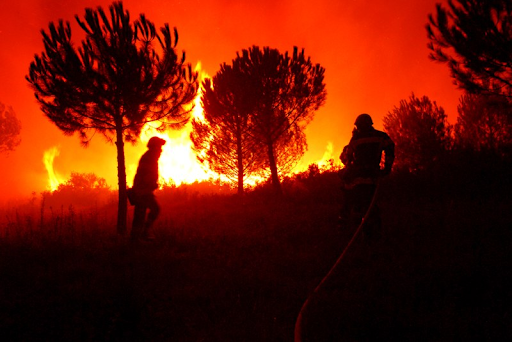
Climate change | Wildfires
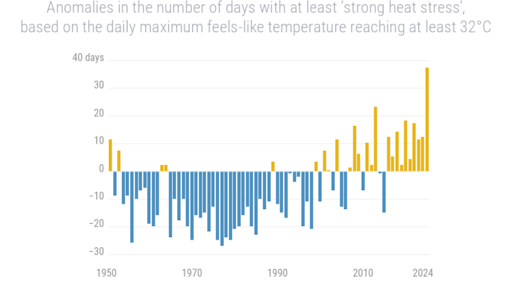
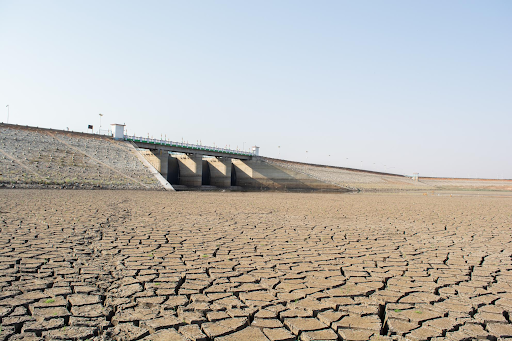
Climate change | Heat and Drought
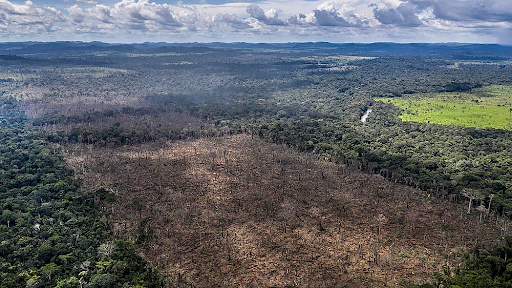
Deforestation | Ecosystems disruption | Soil erosion
Soil erosion
- In 2016, over 80 % of all areas in the EU-27 estimated to be affected by moderate to severe soil erosion were agricultural areas and natural grassland
- The share of agricultural areas and natural grasslands estimated to be affected by moderate or severe soil erosion by water declined by 2.6 percentage points in the EU-27 between 2000 and 2016.

Contaminants in treated and untreated drinking water
- Monitoring data indicate that perfluorooctane sulfonate (PFOS) is widespread throughout European waters, often exceeding regulatory threshold levels set to avoid potential risk to human health and the environment.
- From 2018 to 2022, 51-60% of rivers, 11-35% of lakes and 47-100% of transitional and coastal waters exceeded the annual average environmental quality standards (EQS) for PFOS.

Ecosystem health influences prospects for
climate resilient development
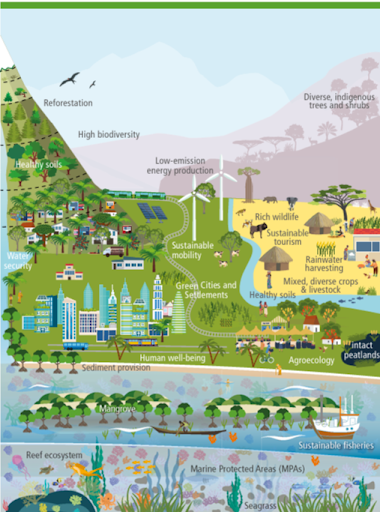
- Human activities that protect, conserve and restore ecosystems contribute to climate resilient development
- Diverse adaptation responses to current and nearterm climate impacts are already under way in many cities and settlements in different world regions
- These responses range from hard engineering interventions to nature-based solutions, social policy and social safety nets to disaster management and capacity building
Interactive Activity 6
Word bank:
Pollution, Warming, Deforestation, Overfishing, Degrade, People

